
Xylem-to-soil potential of 50-200 mV
Peer reviewed
Validation
The plant-soil electrical potential is established in peer-reviewed literature. What that signal adds to existing reference methods, and how reliably across species, sites and seasons, is not yet established. This page sets out the programme that will investigate it.
Status
Xylem-to-soil potential of 50-200 mV
Peer reviewed
Under-canopy conditions differ from open-clearing weather readings
Peer reviewed
Voltage change ahead of visible drought stress, controlled study
In evaluation
Correlation of the signal with fuel moisture
In evaluation
Multi-season electrode stability
In evaluation
Incremental information over existing reference methods
In evaluation
Any lead time over conventional monitoring, reported as an open outcome
Open question
Maintenance-free multi-year operation
Target
Programme
Control experiments Bench and plot work that separates a plant signal from an electrode effect, using identical electrodes, dead-wood controls and soil-only controls.
Pre-registered protocol A protocol registered in advance with an independent academic partner, including the pass criteria, before any field data is collected.
Field deployment Instrumented stands with paired reference sampling on a fixed schedule, across more than one species and more than one season.
Publication Release of the interim analysis, whatever it shows, with the raw series available to the reviewing partner.
Every programme needs criteria written down before the field season. Ours:
Discipline
Before any field data is collected, the protocol fixes the reference methods, the comparison baselines (weather, soil and satellite data) and the analysis. The questions are whether the signal adds information beyond those baselines, and how reliably across species, sites and seasons. Any lead time is reported as an observed outcome with its uncertainty, not used as a fixed success or stop criterion. If the signal adds no useful information, we will publish that result. Formal entry in a public study registry is planned and will be referenced here with its date once filed.
Reference
Love, Mershin & Zhang (2008): Source of Sustained Voltage Difference between the Xylem of a Potted Ficus benjamina Tree and Its Soil. PLoS ONE 3(8): e2963.
https://doi.org/10.1371/journal.pone.0002963
Peer reviewed
MIT News, September 2008: Preventing forest fires with tree power.
Historical
US Patents 7,466,032 (2008) and 7,667,340 (2010), held by Voltree Power, Inc. They expire in 2027.
They establish twenty years of priority in the category. They are not a forward moat and we do not present them as one.
Historical
First under-canopy federal deployment, 2009.
Historical
US 7,466,032 (2008) and US 7,667,340 (2010) claim drawing and using electricity from living plants, the root of the company’s twenty-year priority. Both expire in 2027, and we say so plainly. New filings on the current measurement approach precede any technical disclosure.
Prior work
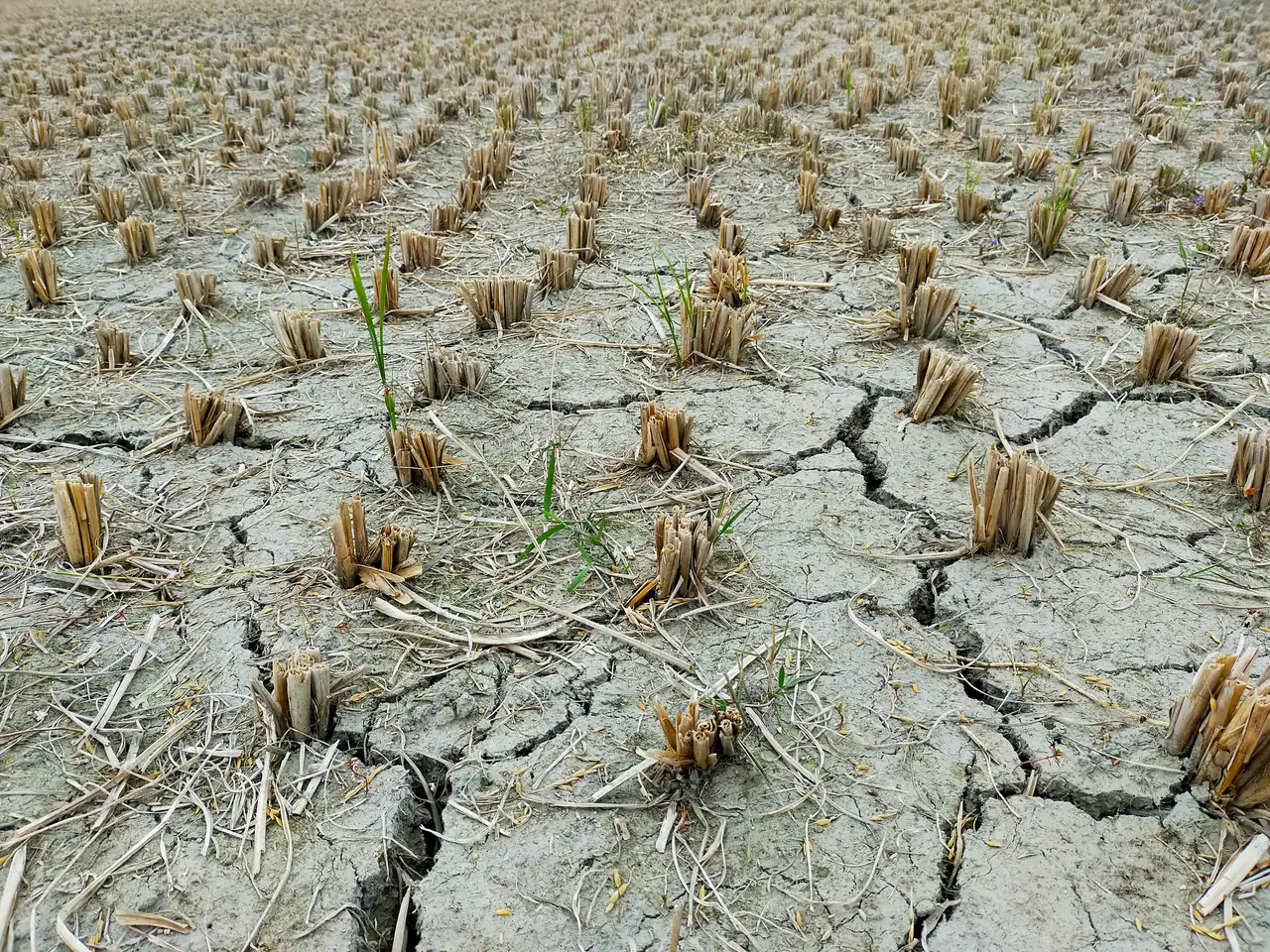
Company-sponsored university research observed voltage changes preceding visible drought stress in a controlled study. It motivates the current programme; it is not a field result and does not establish any lead time. Field validation is the subject of the current programme; the recovered laboratory and field data are being audited as an input to its design.
In evaluation
Method
| Sensor reading | Reference method | Cadence |
|---|---|---|
| Xylem-to-soil potential | Gravimetric fuel moisture, oven-dried samples | Reference weekly, sensor continuous |
| Xylem-to-soil potential | Stem water potential, pressure chamber | Reference weekly, midday |
| Node-local conditions | Co-sited temperature and humidity logger | Continuous |
| Node-local conditions | Nearest official weather station record | Hourly |
We are looking for an independent group to hold the protocol and review the analysis. If your work touches plant electrophysiology, fuel moisture or in-situ sensing, we would like to hear from you.